
A full-flow oil filter and a separate bypass oil filter are different parts of a lubrication system. If your engine’s maintenance instructions require both, one does not replace the other. The phrase “bypass valve” describes a valve, not necessarily a second filter.
That distinction matters when you are comparing service kits online or asking a parts counter for “the oil filter.” A correct order identifies the job of each filter, its reference and the quantity required for your engine.
What does each filter do?
The full-flow filter handles the main lubrication stream. A separate bypass filter treats a smaller stream through another path. Not every engine uses both, and some systems combine functions in one assembly. Choose the arrangement specified for the engine rather than treating either design as a universal upgrade.
For an owner, the useful question is simple: Which filters are listed for my engine’s scheduled service? A photograph of two or three canisters cannot answer that reliably.
Why a bypass valve is a different thing
A filter bypass valve provides an alternative oil route when the pressure difference across the filter becomes high enough for that design. It can be located inside a filter or in the engine’s filter arrangement. It helps maintain oil supply under the conditions for which the system was designed.
Consequently, “full-flow filter with bypass valve” and “separate bypass filter” are not equivalent product descriptions. Do not choose a part because both listings contain the word “bypass.” Ask the seller to identify its intended position and application.
How to identify the right service set
- Find the engine identity. Gather make, model, engine code and chassis/VIN. The same model name can cover different engines.
- Check the required positions. Use the engine’s service information or an authoritative application catalogue to identify the filters involved.
- Match every reference. Ask which replacement number corresponds to each OE number.
- Confirm quantities. “One set” is ambiguous unless its contents are listed.
- Check included components. Confirm the seals and other items needed for that scheduled service.
Include gearbox identification when the application data requires it. If you photograph the old filters, keep their labels legible. Those markings are useful supporting information, but they should be checked against the vehicle records because an earlier installation may have been incorrect.
Is the same size or thread enough?
No. Physical attachment does not confirm function, sealing or the application-specific internal design. An alternative reference may be suitable, but the supplier should confirm the application through catalogue evidence. Do not test compatibility by fitting an uncertain filter and starting the engine.
Do both filters need changing together?
Follow the current service schedule for the exact engine. Where the scheduled job lists both types, replace the required items to complete that job. There is no single replacement interval or filter count that applies to all trucks. A claim of finer filtration is not permission to extend oil-drain intervals.
Keep the invoice or service record with the fitted references and quantities. This makes the next purchase easier and helps a workshop investigate a later concern without guessing what was installed.
What if you have an oil-pressure warning after service?
Follow the vehicle manufacturer’s warning and stopping instructions, and have the installation and oil system checked. A warning does not prove that the filter is the only cause. Report when the symptom started, what was changed and whether there is a visible leak. Do not keep driving to see whether a different filter might help.
Frequently asked questions
Can a bypass filter replace the full-flow filter?
No. Use each filter in the position and configuration specified for the engine.
Can I order a filter kit by truck model alone?
That may leave important variants unresolved. Provide the engine code and chassis/VIN, with OE references where available.
Does a filter without a built-in bypass valve have a missing part?
Not necessarily. Some designs locate the valve elsewhere. Confirm the specified configuration rather than assuming all filters should have the same internal features.
Should I buy the filter with the highest advertised efficiency?
Start with confirmed application suitability. An isolated efficiency claim does not establish that a filter is the correct replacement.
Get help identifying your oil filters
Contact ASTROLINE with your OE numbers, engine code, chassis/VIN and label photographs. Ask for confirmation of each filter’s reference, role and required quantity before ordering. See our product families for an overview. Product availability, price and compatibility require individual confirmation.
Technical sources
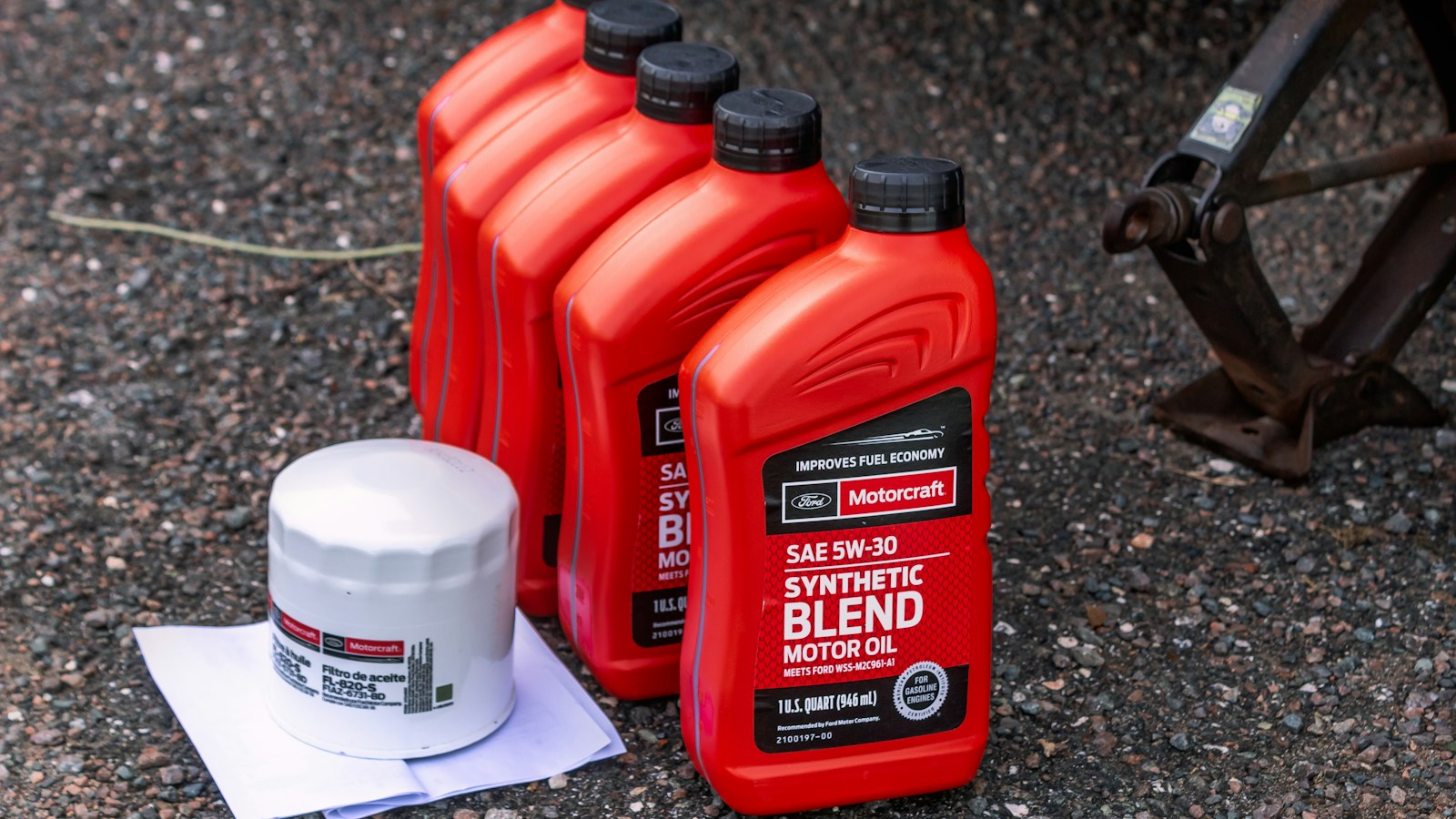
Sources reviewed 2 November 2026. This is general buying guidance; the engine’s current service instructions govern the work. Photo: Rinald Rolle / Unsplash, under the Unsplash License. Illustrative oil-service image; it does not identify a truck application or an ASTROLINE product.