
Introduction: evaluate an intake barrier as an assembly
An engine air-filter element is often compared through external dimensions and a headline efficiency figure. Those observations are useful, but an aftermarket approval needs a wider question: how does the intended air-cleaner assembly control contamination while meeting the application’s airflow requirements? Engine air cleaner validation should connect performance data, installation interfaces and production identity.
This article proposes a technical review framework for international product specialists, buyers and quality teams. It distinguishes a supplier’s test evidence from application confirmation and field diagnosis. The framework does not establish approval for a particular reference, and it does not claim that ASTROLINE operates a specific laboratory or owns the manufacturing facilities of its supply partners.
1. Define the application and approved configuration
Start with OE number, engine code and chassis/VIN. Include gearbox identification where the application catalogue requires it. Reconcile these identifiers with housing and element markings, available drawings, catalogue restrictions and installed modifications. An unresolved reference mismatch is an open technical point, even if the candidate element can be placed inside the housing.
Define whether the assessment covers an element, a housing, an inlet pre-cleaner, a safety element or a complete system. Record reused parts and connections to the clean-air duct. Specify the drawing revision and the configuration used for each test. Results for one element-and-housing combination should not silently become evidence for a different interface or assembly.
2. Keep restriction, efficiency and capacity separate
The public abstract for ISO 5011:2025 identifies airflow restriction or differential pressure, dust collection efficiency and dust capacity among the performance characteristics used to compare air cleaners. These are separate properties. A low clean-filter pressure drop cannot alone establish dust protection or useful capacity, just as a high efficiency figure cannot alone establish acceptable restriction.
Use one requirement line for each property, with its acceptance basis and evidence source. If a supplier provides a percentage, request its definition, applicable configuration and conditions. Avoid ranking submissions before establishing whether they describe comparable measurements. The standard’s abstract identifies the scope; it does not provide the complete test procedure or product-specific acceptance limits.
3. Establish the conditions behind a performance report
Record the method and edition, test airflow, challenge dust, test configuration and termination criterion stated in the report. Identify the sample, preparation and any deviations. Ask the competent test provider to clarify missing information. A statement that a product was tested “to ISO 5011” is not a substitute for knowing what was tested and what the result covers.
Donaldson’s explanation of efficiency testing also distinguishes laboratory test dust from real operating environments. Treat field performance as something to assess against the application, not as a guaranteed conversion from one laboratory result. Claims about service-life improvement need a defined comparison and exposure basis. Do not infer a universal replacement interval from a capacity figure alone.
4. Examine the sealing interface independently
Map the intended separation between dirty and clean sides. MAHLE’s design overview describes the role of seals and their fit with the sealing geometry. For a candidate product, review seating surfaces, sealing profile, locating features, cover engagement and the relevant housing condition. A dimensional match in length or diameter does not describe the complete interface.
Define the inspection or test needed to address a suspected bypass path. This may involve assembly-specific evaluation rather than media testing alone. Document the conditions, acceptance criteria and limits of the assessment. Do not label a filter-medium report as proof of complete housing integrity. Conversely, an acceptable seal check cannot replace evidence of filtration performance.
5. Consider service handling as part of product evaluation
An air cleaner must be installed and maintained without avoidable contamination of the protected path. Review the intended handling instructions, element orientation, access and service clearance. Donaldson cautions that unnecessary opening and removal can introduce contamination or incorrect installation. This makes clear instructions and repeatable assembly relevant to quality, even when the part itself meets its drawing.
Where a safety element is specified, record its reference and role within the approved configuration. Donaldson advises against cleaning it or operating with it as the only installed filter. A review should not treat the safety element as interchangeable with the main element. Its condition and service criteria belong in the application information, not in a generic substitution rule.
6. Build a proportionate validation matrix
For each requirement, identify the requested evidence, responsible reviewer and decision criterion. Proposed categories include dimensional conformity, sealing interfaces, restriction across the specified flow range, dust efficiency, capacity and any relevant durability assessment. These are planning categories. Actual methods, limits, sample quantities and test facilities must be agreed for the product and its risks.
Separate development samples from production samples and record their provenance. Confirm whether a report covers the submitted reference and current materials. If a prototype differs from the manufacturing process intended for supply, identify the additional verification needed. A successful sample demonstrates the result of that evaluation, not automatically the conformity of every future shipment.
Use gaps to guide the next action
Keep an explicit column for missing or non-comparable evidence. Assign each gap a next action and an owner. Do not replace absent data with an assumed quality score based on package appearance or commercial familiarity. This allows technical review and price negotiation to progress while preserving the distinction between a promising proposal and a completed qualification.
7. Connect production changes to the approved evidence
Link the approved configuration to drawings, relevant material declarations and batch identification. Agree which changes require review, including changes to media, sealing material, joining process or structural supports where relevant. Ask how affected output is identified and traced. A retained sample is useful only when its relationship to the delivered production is documented.
Define practical incoming checks that verify selected characteristics and paperwork. Do not imply that warehouse inspection reproduces a full qualification programme. Record exceptions and conditional acceptance clearly. When a supplier proposes an alternative construction, review the evidence needed for that change rather than assume an unchanged external envelope preserves every performance characteristic.
8. Interpret field complaints without losing the evidence
Record operating exposure, installed references, service history, restriction measurements and the conditions of measurement. Photograph suspected clean-side dust or seating concerns before cleaning or dismantling removes the context. Restriction and suspected bypass need distinct investigations. A low reading is not proof of an intact barrier; an elevated reading is not, by itself, proof of a manufacturing defect.
Conclude with confirmed observations, supported hypotheses and unresolved points. Link any corrective action to a revised requirement or verification step. Review recurring cases using consistent definitions and a meaningful exposure base. The outcome should be a stronger product or service decision, rather than a return label that hides uncertainty.
FAQ
Does identical size establish interchangeability?
No. Confirm the application, sealing geometry, assembly configuration and relevant performance requirements before approving a substitute.
Can one efficiency percentage compare every air filter?
No. The measurement definition, test conditions, configuration and scope must be comparable. Restriction and capacity also need their own review.
Does reference to ISO 5011 mean a product is certified?
No. A test-method reference and product certification are different claims. Review the actual report and any separate approval evidence.
What information starts a useful technical enquiry?
Provide OE number, engine code, chassis/VIN, housing and element references, drawings where available and the requested evaluation scope. Include gearbox identification when required.
Discuss the specification with ASTROLINE
Explore our product families, quality approach and Technical Center. Contact ASTROLINE with the application identifiers, drawings and evidence requirements. Availability, compatibility, manufacturing scope and test arrangements require individual confirmation.
Technical references
- ISO 5011:2025: public abstract and scope; the full standard was not used as a publicly available test procedure.
- Donaldson: air-filter efficiency testing.
- Donaldson: servicing by restriction.
- Donaldson: safety filters.
- MAHLE: air-filter construction and sealing.
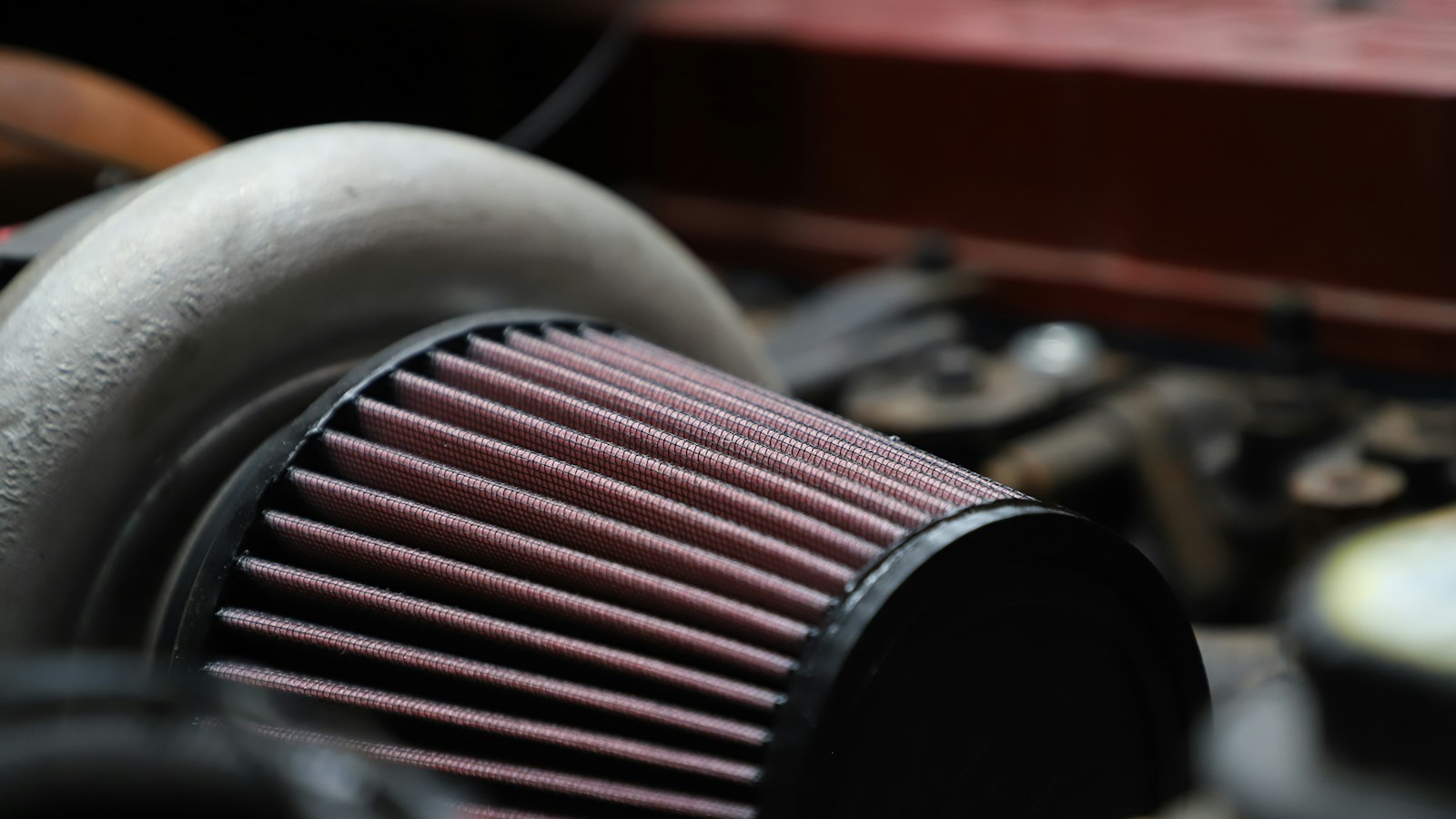
Sources reviewed 29 October 2026. The review framework is an editorial synthesis; application specifications determine acceptance. Illustrative air-filter photograph: Dylan Gillis / Unsplash, under the Unsplash License. The pictured configuration is not a product recommendation or an ASTROLINE product claim.